Skip to content
Private Akutklinik · Bad Herrenalb Mo–Fr 8:00–16:30 Uhr · Kontaktaufnahme rund um die Uhr

Post-Traumatic Stress­ Disorders.

Post-Traumatic Stress Disorder is defined as a possible reaction following a traumatic event or multiple traumas. An event is considered traumatic when it is of catastrophic magnitude and triggers in those affected feelings of loss of control and autonomy, helplessness, fear, and threat to life.

Inpatient Treatment · Private Insurance · Government Allowance · Self-Pay

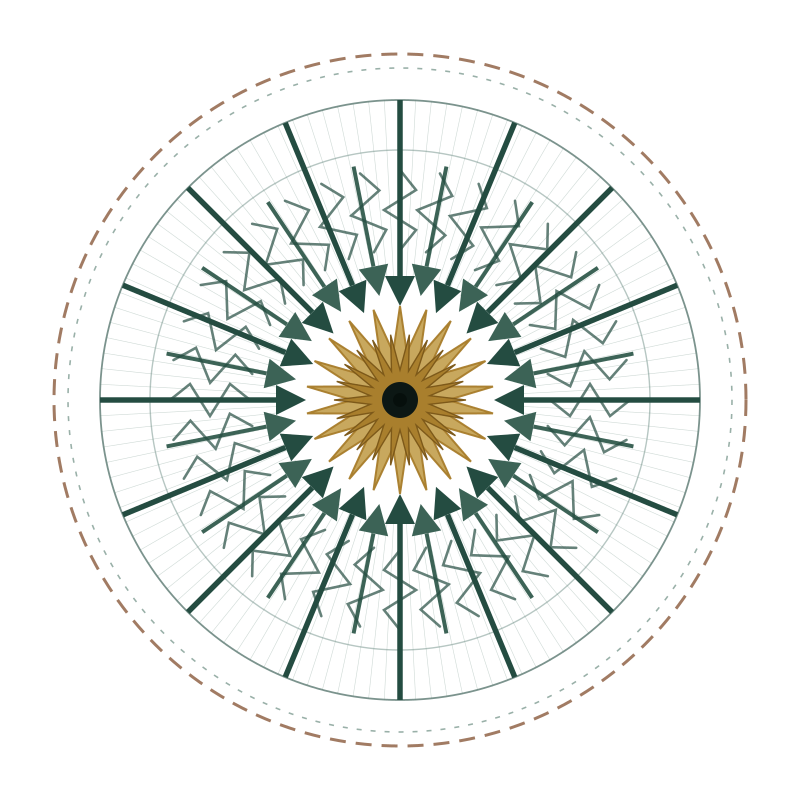
Mandala for post-traumatic stress disorder: dark centre of pain with lightning bolts and waves
Powerlessness, pain, and fear
Lifetime Prevalence1–7%

in the general population; varies considerably depending on the type of trauma.

What trauma leaves behind.

Alongside the objective severity of the trauma, the determining factor for psychological injury is the individual's available capacity for processing (resilience). In the specialist literature we distinguish between single, time-limited traumas — Trauma I (accidents, natural disasters, assaults, etc.) — and those, Trauma II, that extend over a longer period and occur repeatedly or involve a specific person (war experiences, recurring sexual or physical violence, including within the family or partnership, child abuse, child sexual abuse). The latter place a greater burden on those affected and ultimately lead to complex trauma-related disorders.

The lifetime prevalence of PTSD in the general population is 1–7 %.

The syndromal disorder of PTSD includes: intrusive thoughts about the trauma (intrusions), a recurrence of traumatic memories in all sensory modalities (flashbacks), memory gaps (partial amnesia), hyperarousal symptoms such as irritability, exaggerated startle response, sleep disturbances, and concentration difficulties, as well as avoidance behaviour towards situations that serve as reminders of the trauma, emotional numbness (numbing), and dissociative symptoms. In the course of the illness, comorbid depressive disorders and dependency conditions develop with increased frequency; in complex trauma-related disorders, eating disorders (primarily bulimia) and personality disorders (borderline) also occur.

Complex PTSD

Simple and complex post-traumatic stress disorder.

If a trauma-related disorder develops (depending on the severity of the trauma and the coping mechanisms available), the first symptoms appear with a time delay, within 6 months of the trauma experienced. If the symptoms persist over a longer period (more than one month), we diagnose PTSD.

People with complex Post-Traumatic Stress Disorder are particularly severely affected; they suffer from the symptoms described above and are, in addition, deeply shaken in their personal value system, in their trust in other people, and impaired in their capacity for relationships and self-regulation.

Treatment at Sanima Klinik.

The guideline-based treatment of simple and complex trauma-related disorders (Trauma I and II) begins in the first therapy phase with an assessment of the individual's need for stabilisation, taking into account comorbid conditions (addiction, depression, eating disorders, personality disorders). Building a stable therapeutic relationship is of particular importance to us, as trust, dignity, protection, a sense of security, reliability, appreciation, openness, and transparency are fundamental prerequisites for those affected to accept therapeutic interventions, engage with the clinical setting and its external structures and stabilising rules, learn distancing techniques (imagery exercises), acquire skills for affect regulation, refrain from self-injurious behaviour, let go of existing contact with perpetrators, open up, and challenge themselves, among many other things. The cross-method setting (see course of treatment and therapy methods) provides space for relief, structural developments (including self-awareness and self-regulation), the expansion of social skills, and improvement in the sense of self-efficacy. This stabilisation phase may last weeks to months.

Depending on the severity of symptoms and existing comorbidity, psychopharmacological agents — for example antidepressants — may also be indicated in the treatment of Post-Traumatic Stress Disorders. Thorough medical explanation will be provided. The decision about taking medication ultimately rests with the patient. In the spirit of transparency and mutual trust, it is important to us to address all questions, concerns, and reservations, and to seek the best possible, non-self-injurious symptom relief for those affected.

Depending on the level of symptom relief achieved, a phase of trauma processing (e.g. using EMDR) may follow the stabilisation phase in in-depth psychotherapy (still in the inpatient or subsequently in the outpatient setting). The aim of the trauma processing phase is to engage with the traumatic memories under protected conditions (to process them), until the memory of the trauma can ultimately be experienced as something that belongs to the past — no longer as a feeling of being subjected to the trauma in the here and now. This means that at the end of a trauma-processing procedure, the traumatic memory is stored in a changed form in the memory, along with the certainty that it is something that has passed. This trauma processing is not offered at our clinic; it should be carried out in a setting that specialises in treating PTSD with trauma processing.

Our clinic offers a sheltered therapeutic atmosphere and a cross-method setting to accompany the trauma-therapeutically stabilising path outlined above, and to connect it with subsequent outpatient or trauma-processing-specialised follow-up care, in close consultation and taking into account the existing need for support.
Häufige Fragen

Answers to frequently asked questions about Post-Traumatic Stress Disorders.

Patients, relatives, and referring physicians ask us recurring questions. Here you will find the most important answers summarised.

01.What is the difference between simple and complex PTSD?

Simple PTSD usually follows a single traumatic event. Complex PTSD develops after repeated or prolonged traumatisation and additionally affects emotional regulation, self-image, and the capacity for relationships — it therefore requires correspondingly more time and stabilisation in treatment.

02.Do I have to talk about the trauma immediately in therapy?

No. Guideline-based treatment is phase-oriented: the beginning focuses on safety, stabilisation, and building a stable therapeutic relationship. Engagement with the trauma only takes place once sufficient stability has been achieved — and always at a mutually agreed pace.

03.Who covers the cost of treatment?

Admission is open to privately insured patients, those entitled to government allowance (Beihilfe), and self-pay patients. Some statutory health insurers (e.g. Techniker Krankenkasse and DAK) stipulate in their statutes that, under certain conditions, they may cover the costs of treatment at a purely private clinic up to the level of comparable rates at a hospital approved under Section 108 SGB V. We are happy to advise you during the initial telephone consultation.

04.How do I arrange an admission interview?

By telephone on +49 7083 748-0 (Mon–Fri 8:00–16:30) or via the Call-Back Service on the contact page. Our admissions office will respond within 24 hours with a proposed appointment for a detailed, no-obligation telephone consultation.

Quellen

Fachliche Grundlage der Inhalte.

  1. [1]S3 Guideline: Post-Traumatic Stress Disorder AWMF Guideline Registry (ed.). register.awmf.org — current guidelines
  2. [2]ICD-10-GM — Chapter V, F43.1 (Post-Traumatic Stress Disorder) Bundesinstitut für Arzneimittel und Medizinprodukte (BfArM). bfarm.de — ICD-10-GM
  3. [3]Deutsche Gesellschaft für Psychiatrie und Psychotherapie, Psychosomatik und Nervenheilkunde (DGPPN) Specialist information. dgppn.de
Admission

Contact us — personally, confidentially, without delay.

Phone · Admissions Office
+49 7083 748-0
Admission
Privately insured · Entitled to supplementary benefits · Self-paying

Patients of some statutory health insurance providers (e.g. Techniker Krankenkasse and DAK) may in certain cases be able to obtain partial cost reimbursement from their insurer.